News
SMC Seeks Adventure in Colorado Rockies
Published on June 25, 2026 - 1 p.m.
Southwestern Michigan College landed in northern Colorado June 7-13, flying from Chicago to Denver.
SMC’s AKO Bible Club set up camp in Estes Park (elevation 7,743 feet), a town known as a base for Rocky Mountain National Park.
It’s home to elk, bears and miles of trails. Trail Ridge Road winds past craggy peaks, forests and tundra, with Roosevelt National Forest wilderness areas nearby.
The Estes Park Aerial Tramway connects the town to the summit of Prospect Mountain for views over the valley.
Rachel Breden, CRM Administrator and Communications Process Manager, advises the club, which sent six students — Kaylee Bradshaw, Payton Yarbrough, Luke Long, Keegan Parsons, Natalie Tappenden and Zach Truelove — and another adult chaperone, Career Development Manager Melinda Stockwell.
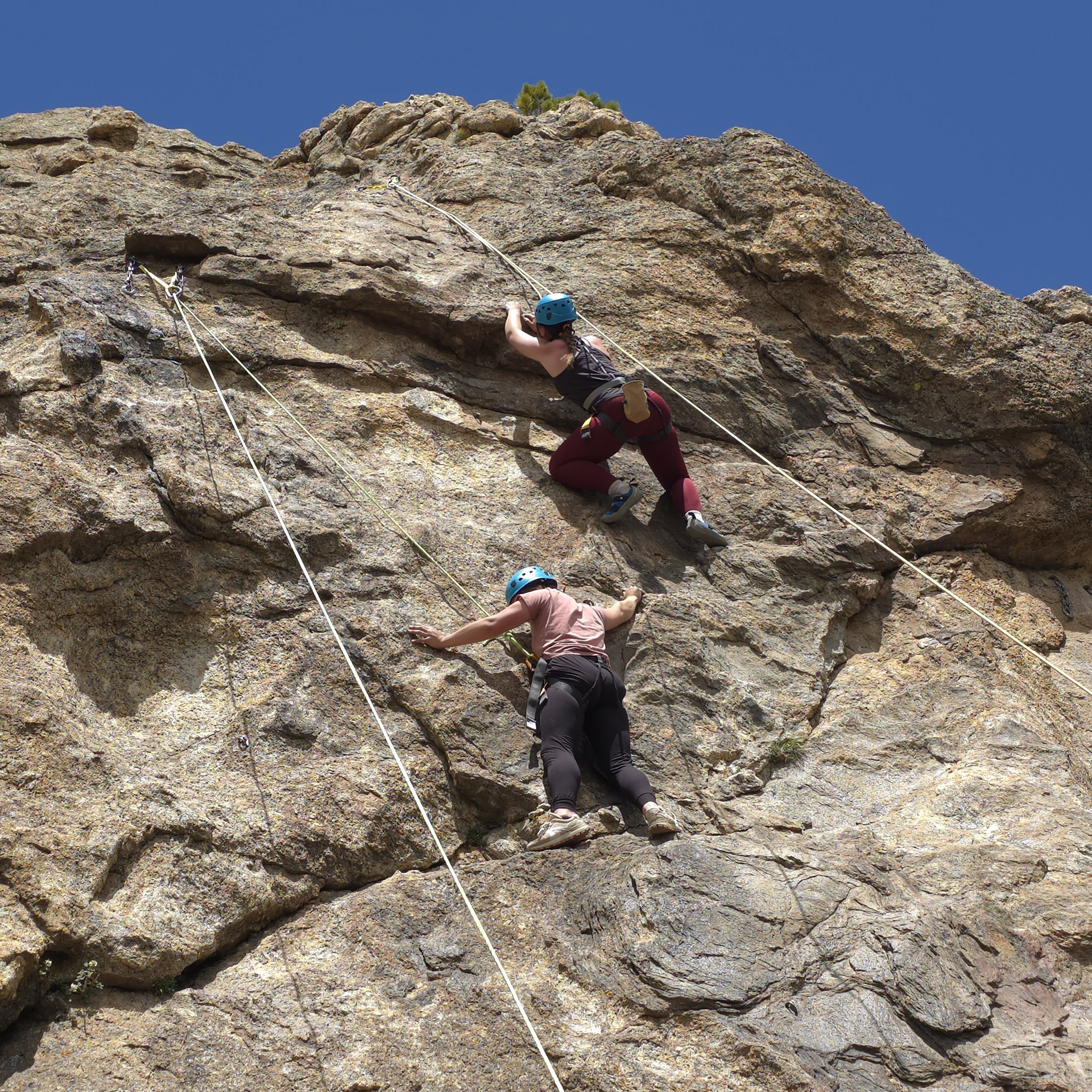
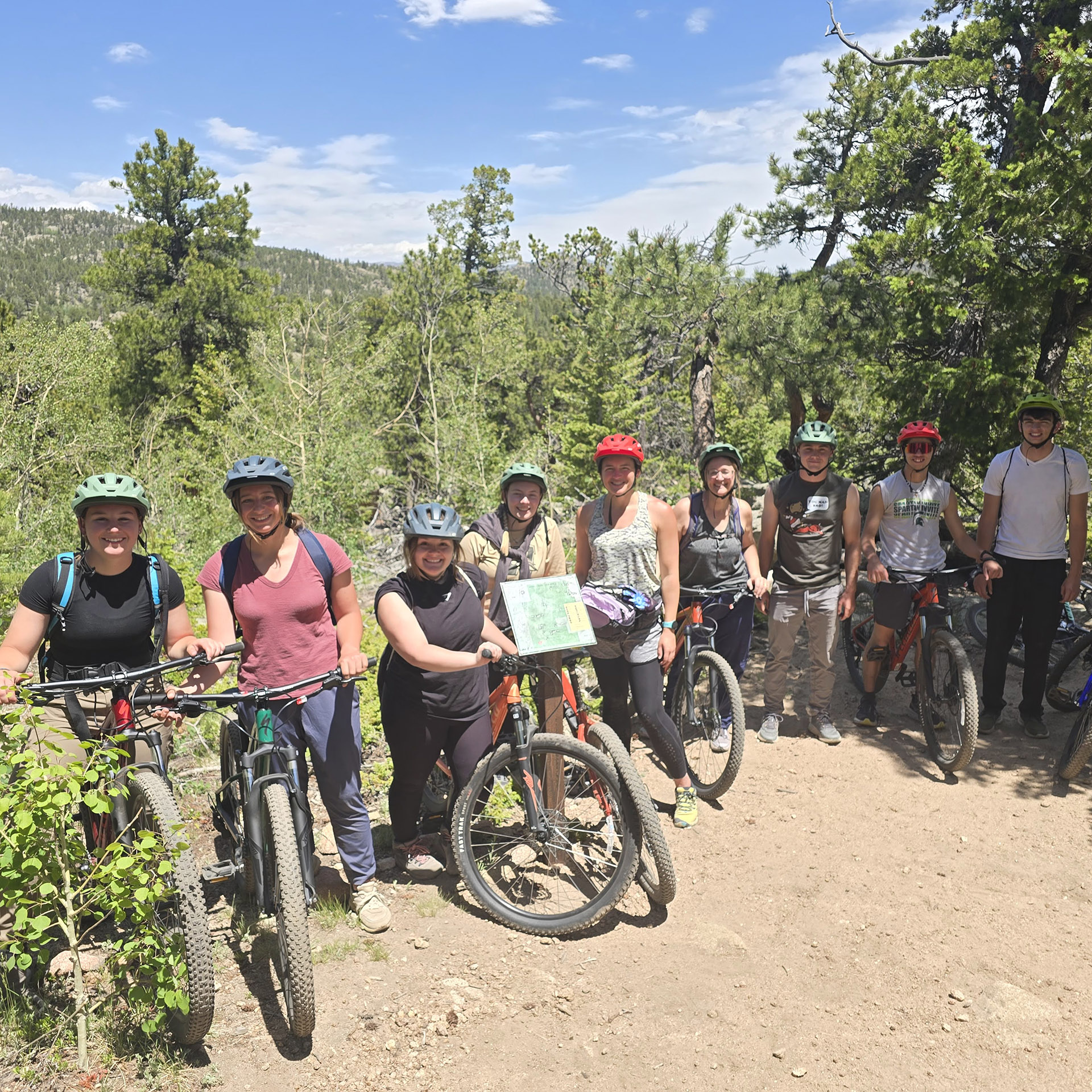
Their week consisted of rock climbing (“doing it on real rock faces is a lot different” than the Student Activity Center wall), mountain biking (Breden’s personal favorite), hiking and whitewater rafting.
“Luke Long loved (mountain biking). I don’t know that anyone else did,” Breden said. “The elevation did not bother him at all.”
Long was fresh from distance running at the NJCAA Nationals in New Mexico.
The Roadrunners on their last day squeezed in an excursion to Stanley Hotel in Estes Park, which inspired Stephen King to write 1977’s “The Shining,” though Stanley Kubrick’s 1980 film used Oregon’s Timberline Lodge for exterior shots.
“We went with a group called Christian Adventures that organized it,” Breden said. “We had four guides we met when we got there,” including a young woman from China.
“We stayed at a campground, and they provided tents, backpacks, sleeping bags, sleeping mats and food,” Breden said. “We had to pack light, too. We could only have one bag that fit under the seat.”
The first day revolved around rock climbing.
Mountain biking on jagged rocks anchored the second.
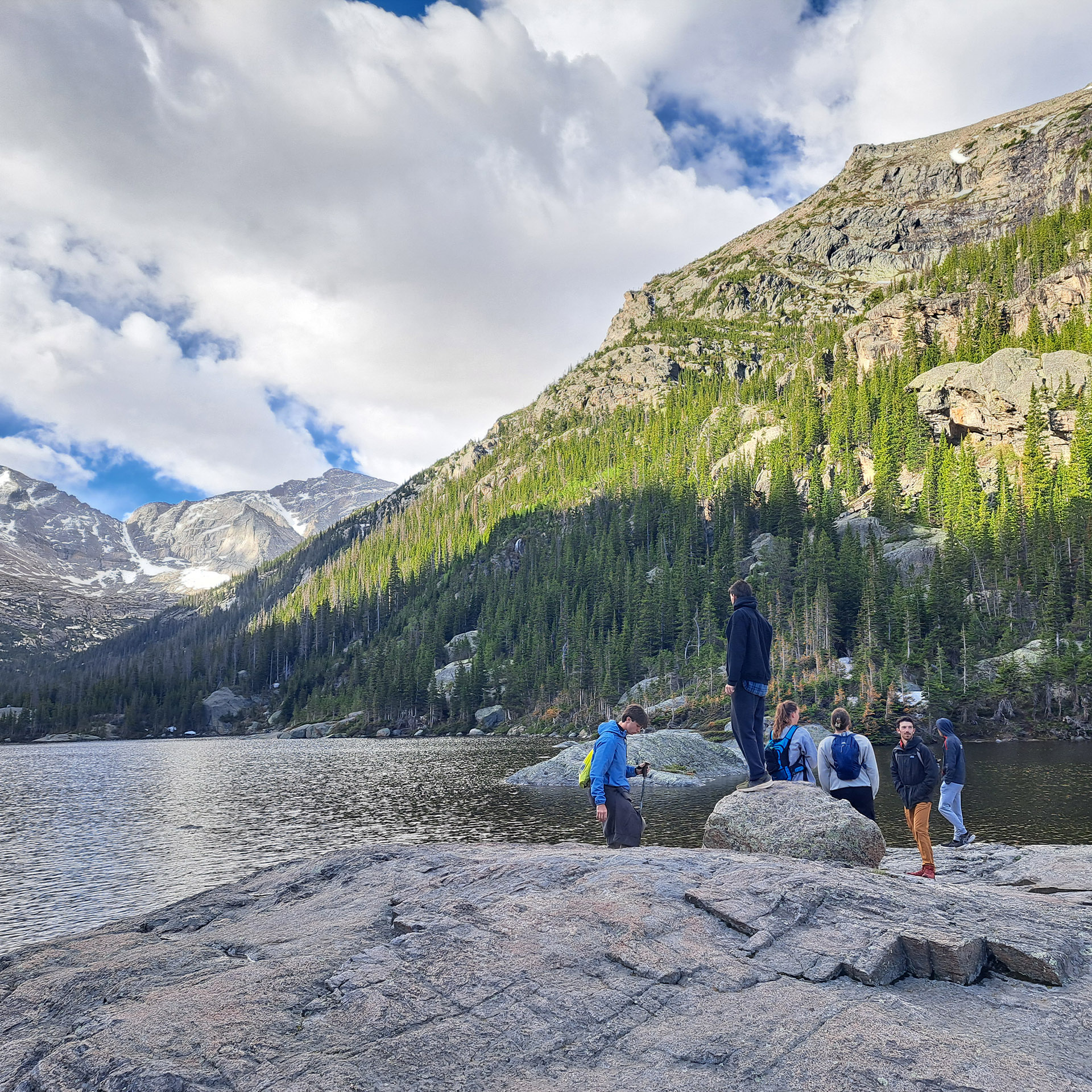
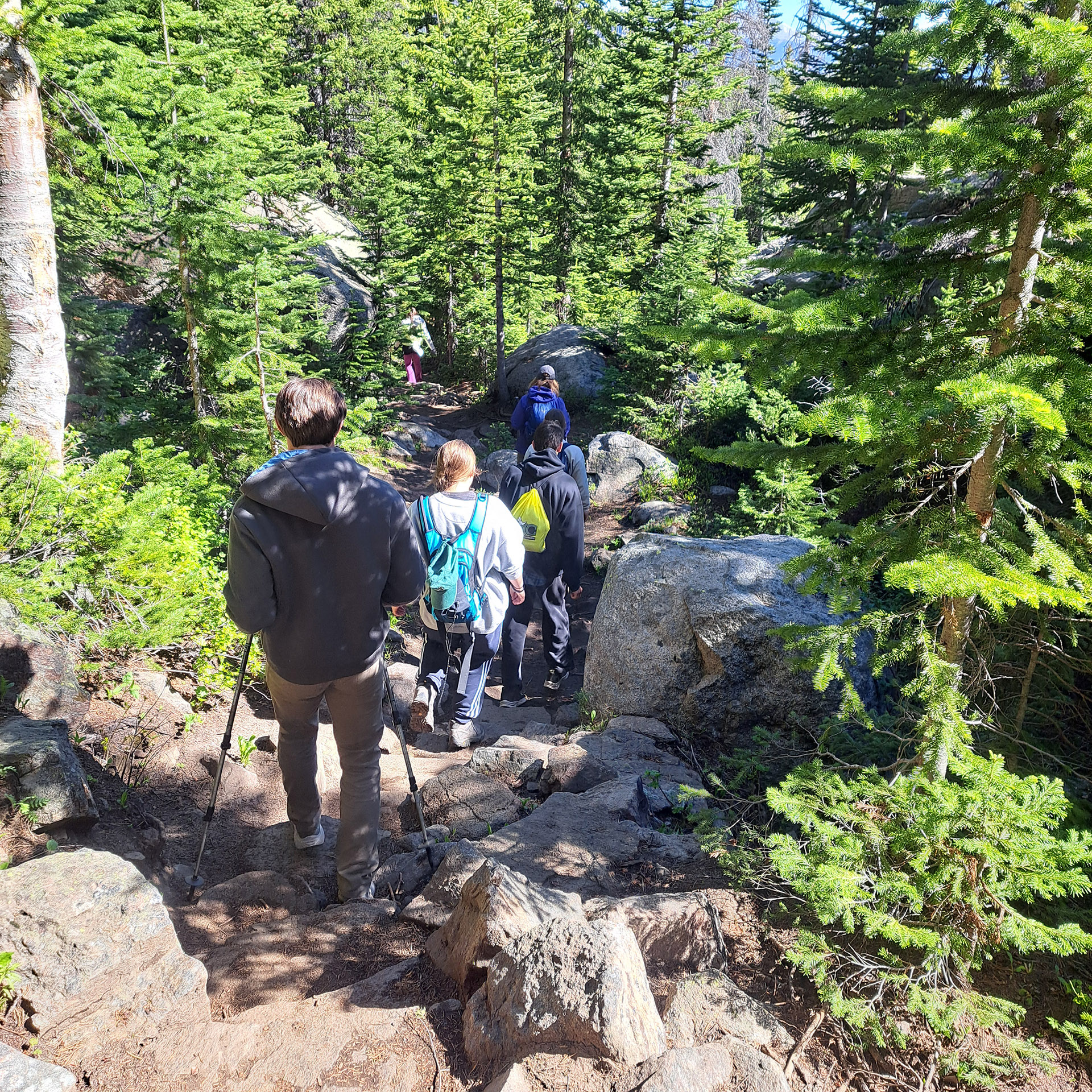
Day three featured a seven-mile hike in Rocky Mountain National Park.
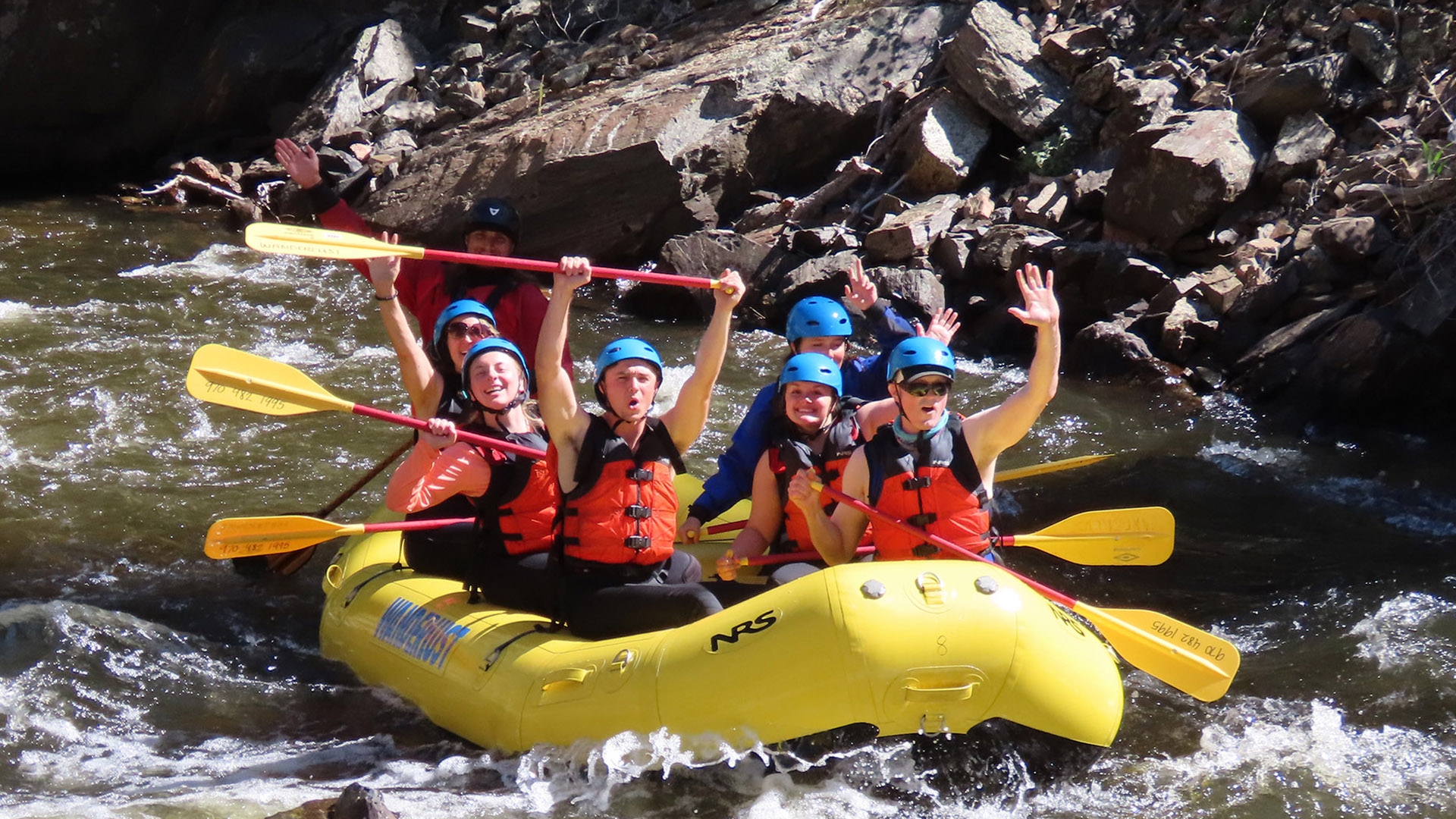
Whitewater rafting took two large rafts on the Cache la Poudre River in the Fort Collins area, spying some bighorn sheep along the way.
The French phrase translates to “hide the powder,” stemming from an 1820s incident when a massive snowstorm trapped fur traders.
To lighten their loads and protect from indigenous groups and the weather, they dug a pit and buried excess supplies— including a quantity of gunpowder.
“Elk were everywhere,” said Breden, who encountered a newborn mule deer in Estes Park that wobbled to her.
Hot, sunny weather bookended some “incredibly windy” middle days.
“Our campsite was in a valley,” Breden said, “so the wind tunneled through with no trees to block it. We came back one day and our tent had collapsed.”
“The morning we went hiking, we got up at 3 to beat the crowds and to watch the sunrise,” Breden said. “Colorado didn’t get a lot of snow this year so they’re having a drought. We couldn’t have campfires. We did s’mores over the propane grill once.”
Hartford’s Kaylee Bradshaw, who graduated in May with all A’s and spoke at the 59th Commencement, is working in SMC’s marketing office this summer before majoring in marketing this fall at Western Michigan University.
For Bradshaw, it was her first time in the Rocky Mountains and her first time camping (“Payton and I were the rookies”), but joining the “Poudre River Swim Team” while whitewater rafting she will never forget. That’s what guides call it when a raft capsizes.
“We were at the last set of rapids,” she said. “I had so much fun up to this point” when the craft clipped a boulder in a tight turn.
“The water was freezing,” said Bradshaw, wearing a helmet and a life jacket over her bright pink shirt. “Our raft went up on the rock and tipped. It didn’t flip over, but was almost perpendicular to the water. Everybody fell out and crawled onto the rock it was stuck on. Everybody got to a secure location but me.”
“Instead of being able to grab onto a rock when I got dumped in the water,” she said, “I got pulled under by the current. When I popped back up I was frantic.”
Guides had already swung into action, sounding an emergency whistle.
“They were yelling for me, but I couldn’t hear them,” she said, “because the water’s super loud. They paddled backwards while I tried to swim toward the raft. I felt like a ping-pong ball.”
“But the staff are all professionals trained for this, and I’m sure people fall out every day. An oar was extended to me, he grabbed me by the life jacket and pulled me into the raft. I’m not Michael Phelps, but I’m a pretty good swimmer. Other than that it was a really fun trip!”
Accustomed to “flat walks in Michigan,” Bradshaw’s favorite part proved to be the predawn hike.
“The first part of the hike was painful because it was dark and raining,” she said. “But the sunrise was beautiful. The views were incredible. We split into two groups most of the time. I was in the slower group, taking scenic pictures.”
Breden read a magazine article about moose, of which Colorado enjoys a thriving population of 3,000-3,500. They were largely absent until a 1978 reintroduction program. Now “they’re destroying their wetlands because they eat so much,” she said.
“This was a nice farewell for my student leaders who put in a lot of work for campus ministry these past few years outside class schedules,” she said. “Each student led nightly devotions around a natural element — trees, water, wind, stars — and their symbolism in the Bible.”