News
Having Fun with History
Published on June 2, 2026 - 11 a.m.
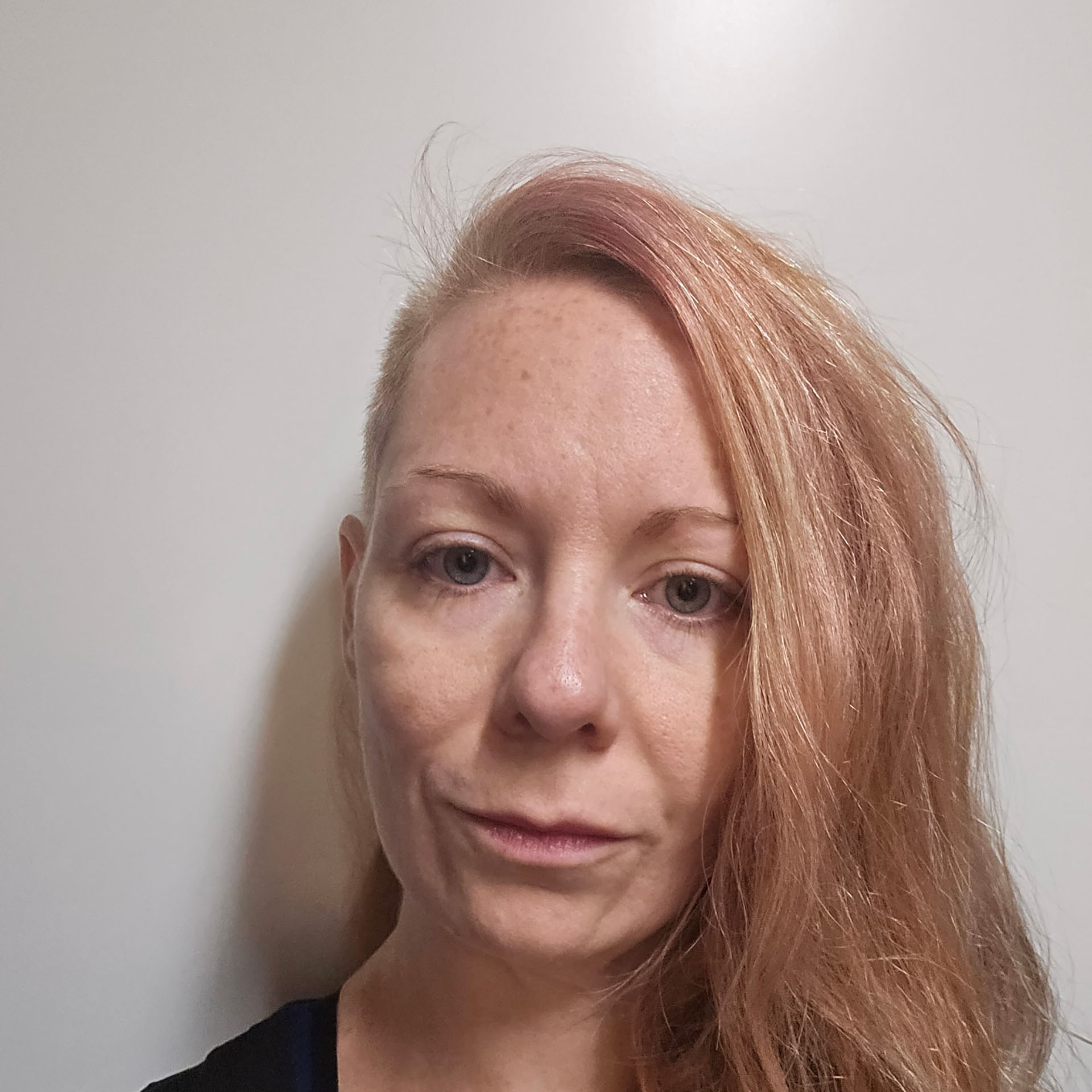
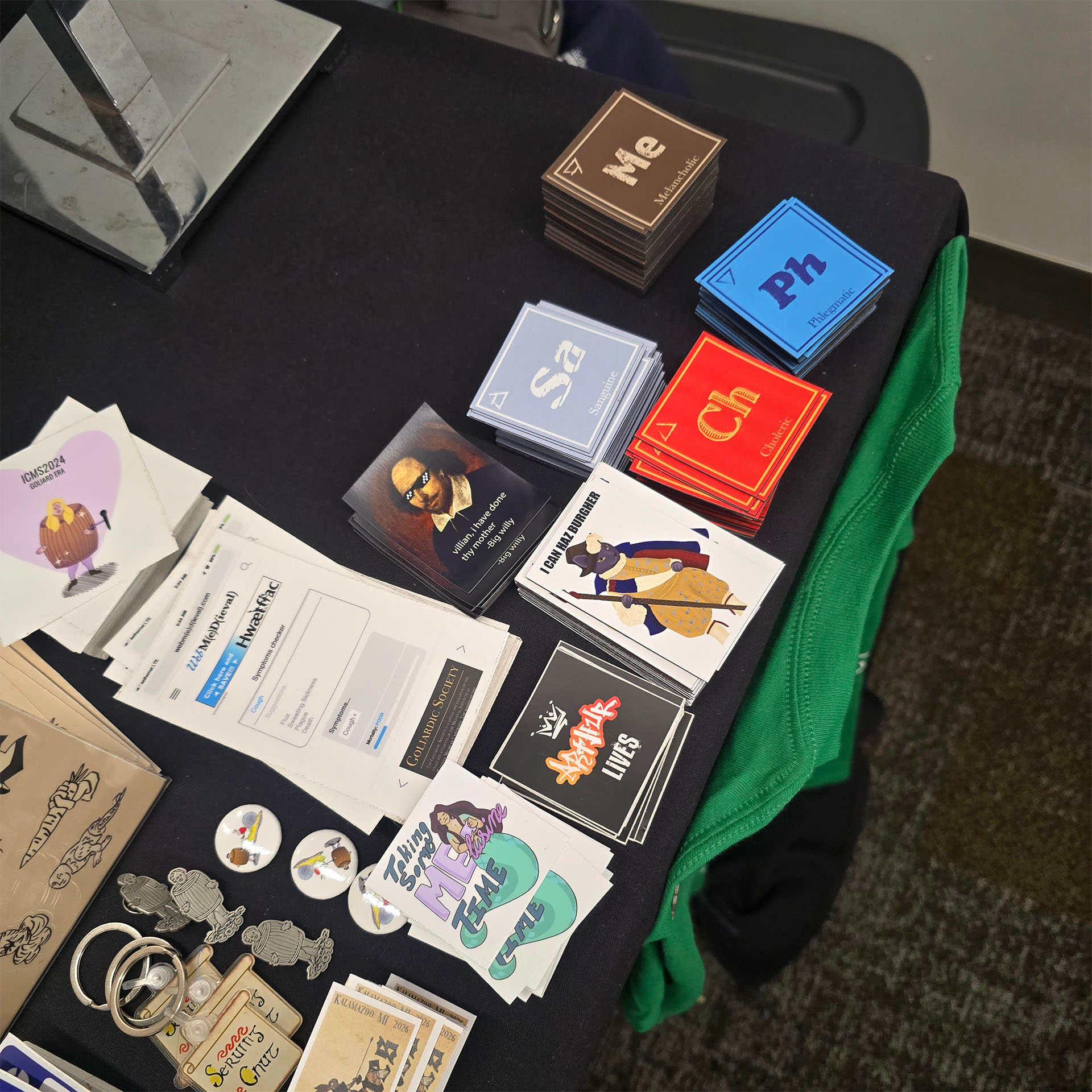
Southwestern Michigan College’s Amber Bader attended the 61st International Congress on Medieval Studies (ICMS) May 14-16.
Bader, who teaches two sections of Western Civilization 102 this fall, participated in several panels and a workshop focused on engagement with students and the public at large.
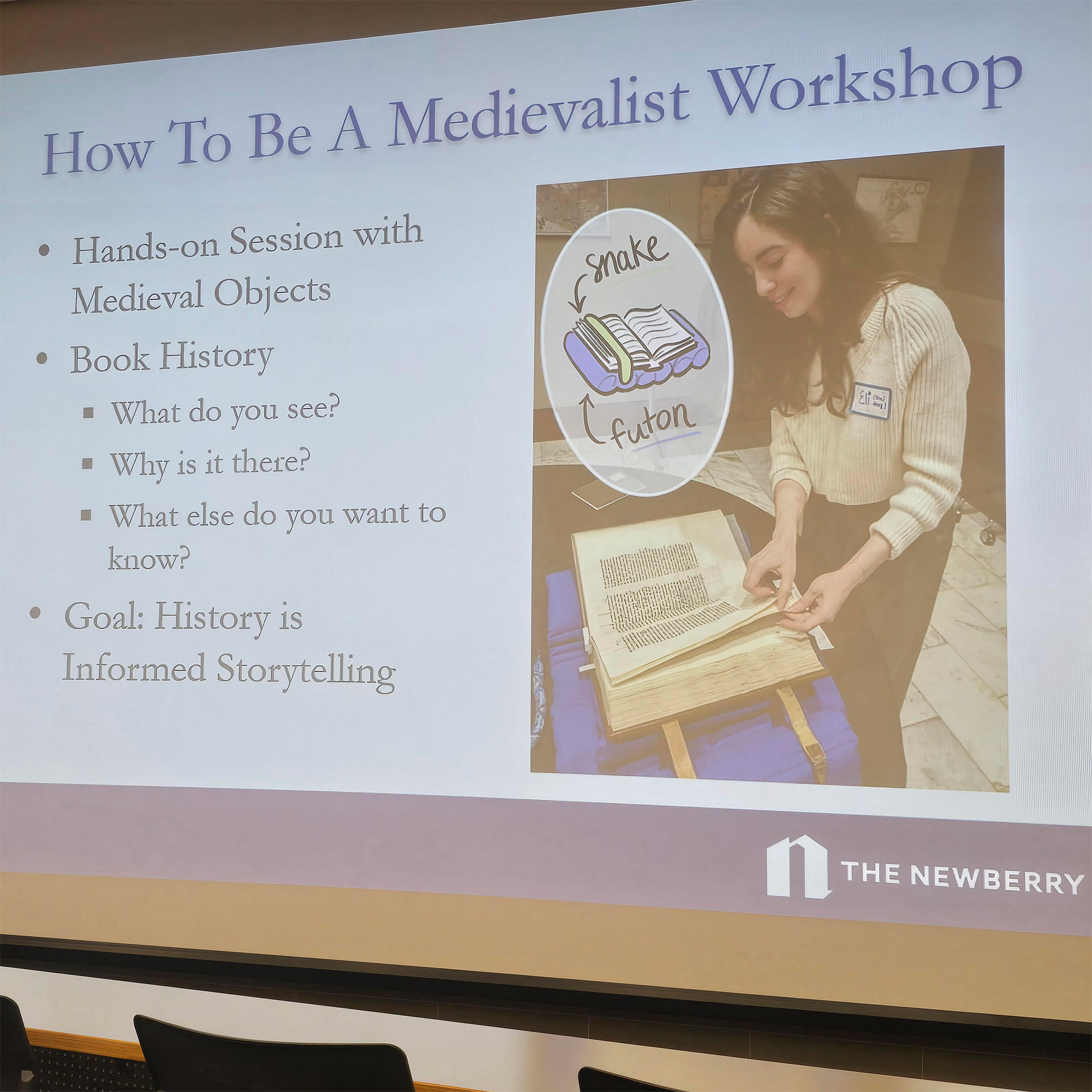
During a workshop hosted jointly by MAM (Medieval Association of the Midwest) and DMSI (Digital Medieval Studies Institute), she was “able to learn skills (such as sword fighting), how to apply them and why.”
“I learned how to code GitHub to create interactive scavenger hunts, pilgrimages and more to help engage students in their surroundings and in historical topics,” she said.
“I learned how to use Timeline through Knight Lab to create interactive timelines for students that drop them into a period or event and provide context, gamifying the experience a little bit.
“Both of these workshops presented ways to gamify historical content and engage students and the public,” Bader said. “There is the potential for broader use of these applications that includes introducing students to a department, a building or even a school/campus.”
Bader, a 41-year-old mother of three, attended a panel about sword fighting in the classroom “that was very entertaining and informative. It focused on student engagement through participation. After the lecture series was completed, we learned the basics of sword fighting. It was very entertaining, with a lot of laughter. We still see sword fighting and jousting today at Renaissance fairs.”
“I was able to engage in a panel about how to utilize drama in the classroom and learned, very briefly, about RPG (role-playing game) makers and the gamification of history classes,” Bader said. “Scyvia is a game produced by two women for their courses that engage students in an 8bit-style game in which they are looking for a manuscript.
“Along the way, players interact with artifacts and non-playable characters that provide them context and historical content, facilitating learning.
“While these were only a few of the interesting panels, workshops and roundtables I attended focused on student and public engagement, they were some I felt I would be able to utilize best at SMC.”
While its name conjures images of thousands of scholars gathering in London or Paris, the ICMS is hosted by the Medieval Institute at Western Michigan University in Kalamazoo.
Bader rubbed elbows with academics from California to Switzerland.
The Congress embraces the study of all aspects of the Middle Ages, extending into late antiquity and the early modern period, including — but not limited to — history, language, literature, linguistics, art, archaeology, religion, science, medicine, music, drama, philosophy, gender, sexuality, mysticism and technology, as well as medievalism.
The first conference at WMU took place in 1962. At first a biennial affair, by 1966 the conference grew to nearly 200 participants from colleges and universities across the United States and Canada. It became an annual event in 1970 and changed the name to ICMS in 1979.
Bader, who grew up in Caro, the county seat of Tuscola County in the Thumb, attended Western’s Medieval Institute at the graduate level beginning in 2017.
“I was able to get a job in the Special Collections and Rare Book Room as a student employee during that time,” she said. “As a student employee I learned a lot about audience engagement and exhibit curation. I was able to apply the research, writing and editing skills I was learning in my courses to create engaging exhibits.
“My field of study in graduate school consisted of heavy writing courses in which I was able to refine my research, writing and editing skills. While my education was research, writing, and editing heavy, my experiences working in libraries consisted of fact checking, curating displays, engaging patrons with library materials and creating youth programming.”
Fascinated by history, “I read anything from ancient Egypt through the Renaissance,” she said, “and I got super into the Bubonic plague. My little local library didn’t have a lot of books,” so at the advent of the internet she found herself reading a science fiction novel by Connie Willis about time travel.
“I got into public history because I love sharing it with other people,” Bader said. “History is for everyone. It’s one of the most inclusive degree programs. There is a history of literally everything. My original goal was working in a museum setting. Then I got in at SMC and I really like it.”
As an historian, Bader knows the cyclical nature, but the current anti-intellectual environment concerns her nonetheless.
“Academics use less slang and fewer colloquialisms in our writing and in our speaking so we can be more understood, which can make other people feel we’re condescending elitists,” Bader said. “It’s easy to attack history when it proves you wrong. The erasure of history is worrisome, but we see echoes of that throughout time.
“Currently, we have erasure from government web sites that people in power feel reflect badly on Americanism instead of accepting that we have done wrong but have grown as a society.
“Those who don’t learn from history are doomed to repeat it,” she said. “Historians who did learn are doomed to watch them repeat it.”