News
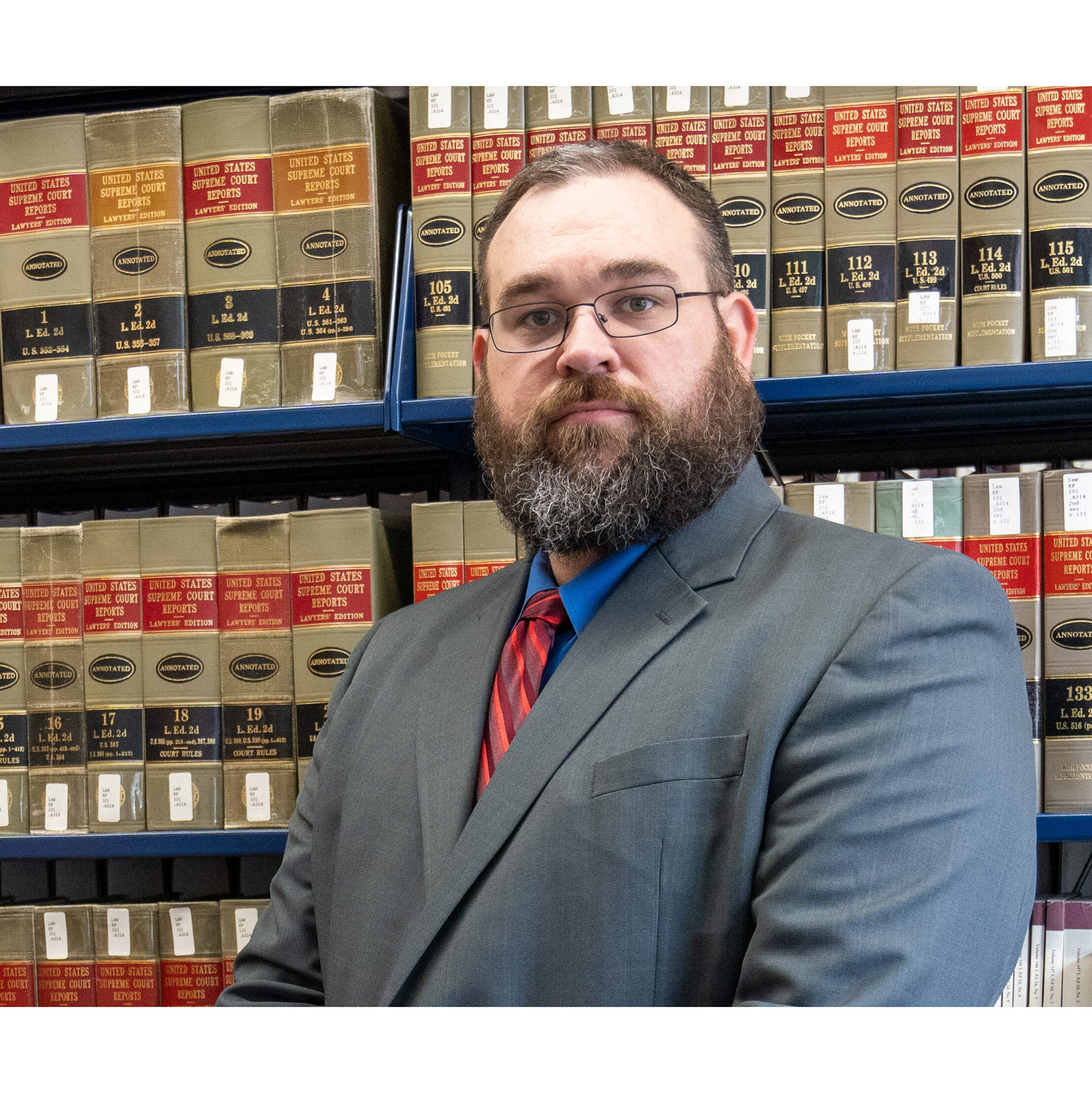
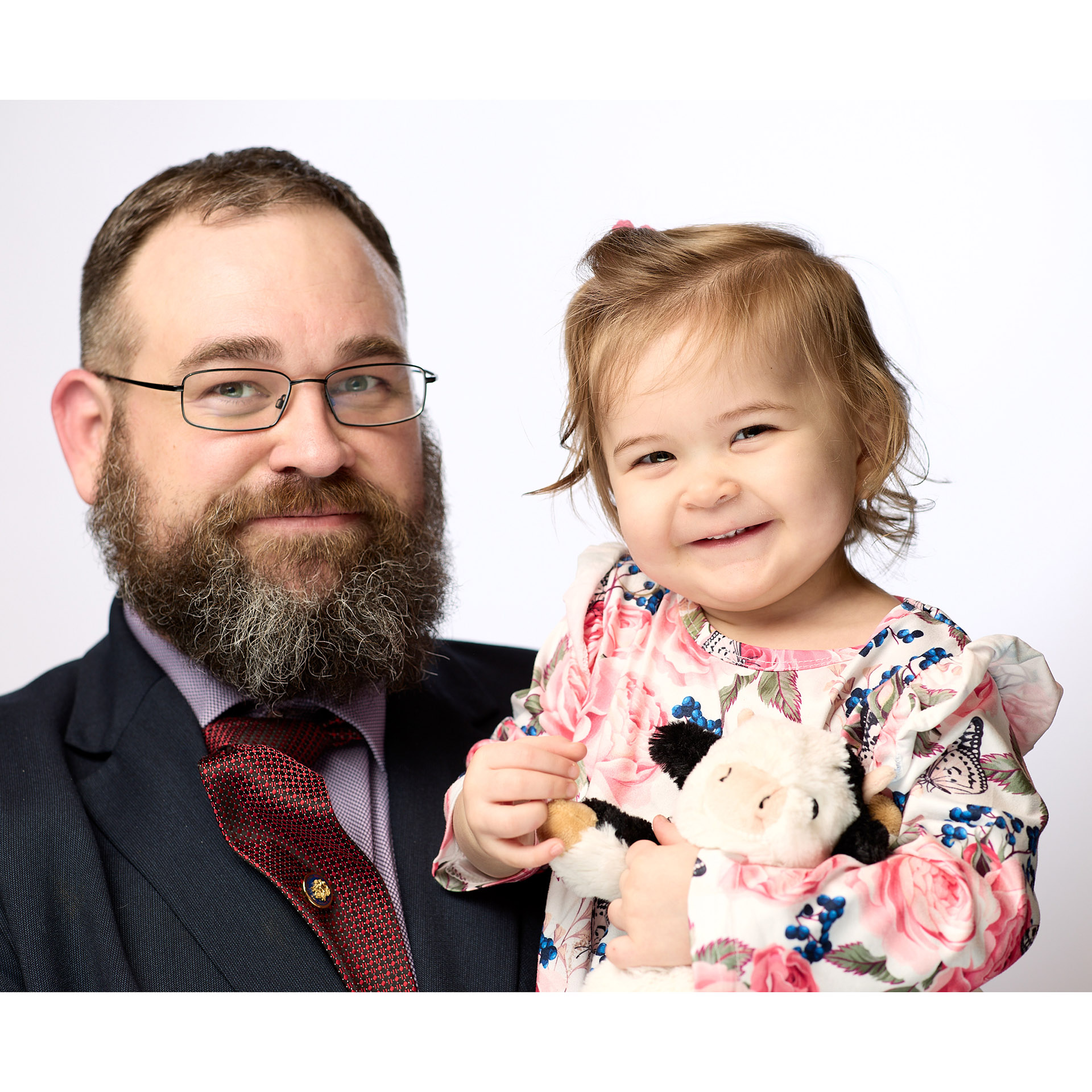
Practicing law with technology
Published on June 23, 2026 - 1 p.m.
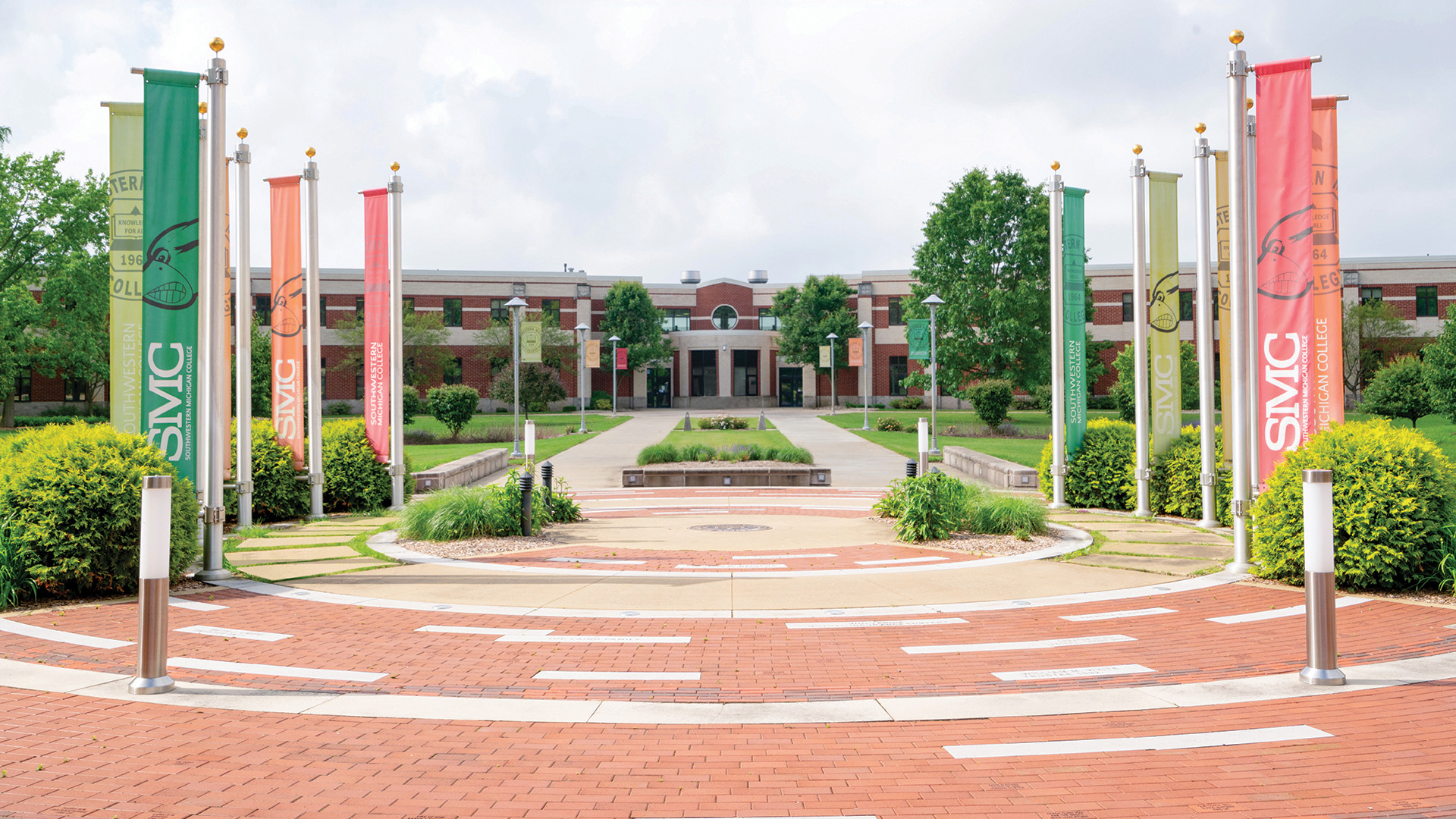
When Joshua Goodrich from Marcellus (Class of 2004) was a student at Southwestern Michigan College, he earned Associate of Applied Science degrees in microcomputer programming and Local Area Network (LAN)/hardware support for the technology career he envisioned.
Cindy, his wife of 23 years, is also an SMC alumna.
“At that time I was planning a career entirely in technology,” said Goodrich. The idea of bridging technology to the practice of law came later.
“From 2000 to 2003, I had no plans to practice law. I am, and have always been, a computer technology person,” he said. “Even today, I work in a highly technical environment. Technology has always been my foundation and my comfort zone.”
From 2001-03, Goodrich was employed by SMC as a computer technician, supporting faculty, staff and students.
“I was part of the team that migrated the college from a Novell network and Windows 95 and 98 systems to Windows XP across campus,” Goodrich said.
“The seed was planted after I left SMC to work at Cornell University in the College of Human Ecology,” he said. “My supervisor’s supervisor, Barry, held a JD (Juris Doctor) but did not practice law. He and I talked often about career paths, and he advised that if I wanted to reach a CIO-level role, a JD might be more valuable than another technical degree or an MBA. He believed that law and technology would increasingly intersect. That advice stayed with me. “While at Cornell, I took two law courses using my employee tuition benefits.
“After Cornell, I moved to Miami University as a software licensing and acquisition manager. That position was grant-funded, and the funding ended approximately six weeks after I was hired, converting the role into a one-year contract,” Goodrich said.
“At that point, I decided to complete my undergraduate degree aggressively. I took 27 credit hours in one semester, made the Dean’s List, finished my bachelor of arts and then went on to law school.
“Even after earning my JD from Thomas Jefferson School of Law (San Diego), my plan was still to remain in the technology field. However, after several years without formal technical employment, I found it difficult to re-enter the field. To bridge that gap, I pursued an LL.M. (Master of Laws) in intellectual property and technology law as a capstone degree.”
Goodrich’s goal pre-law had been becoming a network administrator and, eventually a CIO, or chief information officer.
Cass County roots run deep
Five generations of his family are from Cass County. He graduated from Marcellus High School as a Wildcat in 2000.
Several reasons influenced his decision to attend SMC.
“My mother attended SMC when I was younger, and I remember coming to campus with her while she took classes,” he said. “I was also awarded the Michigan Merit Award Scholarship funded by the tobacco settlement, which provided $2,500 for in-state education. Attending a community college allowed me to stretch those funds as far as possible while receiving a strong technical education.”
The Portage resident’s law firm is in Lansing and Kalamazoo. He taught cybersecurity and computer networking at Western Michigan’s Haworth College of Business.
“I primarily practice in what I refer to as a rectangle covering Battle Creek, Grand Rapids, Kalamazoo and Lansing,” he said, “although I take cases throughout Michigan. One notable case involved defending a drone operator who flew a drone over the Green Day concert at Comerica Park in September 2023 and was investigated for alleged violations of state law, federal law and FAA civil regulations.
“I had a federal civil rights trial in Detroit and Kalamazoo this year for two different defendants.
“I was teaching at WMU on a one-year contract that recently ended, teaching in person two days a week. I will be teaching adjunct for a different school next term,” Goodrich said.
“Like most attorneys, I rely on a structured booking schedule. I block my calendar well in advance and plan carefully around court appearances, teaching obligations and client needs.
I have not appeared before the United States Supreme Court, but I am admitted to practice before it. I was sworn in in person on Oct. 3, 2023. I do have a petition before the Michigan Supreme Court on an interlocutory appeal that is a criminal case assigned by the public defender's office to me.”
All students commuted
“As both a student and an employee, I have many memories of campus,” he said. “At that time, the Dowagiac campus had no residence halls. All students were commuters. By 9 p.m. the campus was essentially empty.
“My office was in the O’Leary Building. Before I took the job, it had been a storage closet, but it was the first office I ever had with a door that closed. Mathews Library was where Ernie Knapp worked. He was a great person and a passionate Apple enthusiast. The museum was still located on campus in the Lyons Building addition. I remember working with President David Mathews and his longtime secretary. I worked under Ron Hein when he led the department.”
Most of his information technology (IT) classes were in the Lyons and O’Leary buildings.
“Students often spent time in the library or in the College Services Building, now the David C. Briegel Building. At the time, the Wood Building housed the automotive program, the Kairis Building housed aviation and the Niles campus hosted our CAD classrooms and the MTEC Center.
“I spent most of my time in my office. Because I could flex my work hours and take classes at night, I was often on campus from approximately 7:30 or 8 a.m. until 9 p.m., Monday through Thursday.”
For fun, there were video games or teaching himself computer skills such as Linux and Unix.
Kay Weimer, chair of the Information Systems Department, influenced Josh’s path.
“She encouraged me to learn COBOL, which ultimately led me to pursue the microcomputer degree rather than the programming track.”
‘Lighthouse,’ the law and robocalls
Lighthouse Litigation, PLLC, was founded in January 2019. He is the founder and principal attorney. His work centers on consumer-protection and civil-rights litigation with a technology focus.
“I hold an FAA remote pilot license and enjoy aerial photography, particularly of water and lighthouses,” Goodrich said. “I did not want to name the firm after myself, in part because I wanted flexibility if I ever chose to sell the practice.”
“Historically, lighthouses served as essential beacons, guiding ships safely and warning of danger for centuries. That symbolism aligns with my practice philosophy. At Lighthouse Litigation, we pride ourselves on providing legal guidance that helps clients navigate complex legal bureaucracy in a personalized manner. Many of my clients come to me when they are in difficult and uncertain situations.”
Before becoming a lawyer, he worked in the IT departments of SMC, Cornell University and Miami University. He is a cybersecurity professional with industry certifications from (ISC)² in Cybersecurity and from CompTIA in ITF+, Cloud Essentials, A+, Network+, Server+, Security+ and Project+. Additionally, he is trained as a Certified Ethical Hacker. In this role, he concentrated on “red team” penetration testing, identifying weaknesses in various companies’ cybersecurity infrastructures.
During law school, he served on the American Bar Association Law Student Division Board of Governors, representing the law schools comprising the 9th Circuit in the ABA-Law Student Division. It was during his law school tenure that he underwent his first training in Alternative Dispute Resolution, initiating his journey to become a mediator. He also belongs to the National Press Photographers Association.
Rising Star in battling robocalls
He has recently been honored with two professional distinctions: selection to the 2025 Super Lawyers Rising Stars list for excellence in consumer law and induction as a Fellow of the American Bar Foundation (ABF)‚ an honorary society of lawyers, judges and scholars recognizing outstanding dedication to the legal profession and the community.
Membership is limited to less than 1 percent of attorneys licensed to practice in each jurisdiction and is based on peer nomination and ABF board approval.
His Super Lawyers Rising Stars status recognized his work in consumer law, with a specific emphasis on litigation under the Telephone Consumer Protection Act (TCPA) — a federal law designed to protect consumers from unwanted robocalls, spam texts and autodialed communications.
The Super Lawyers Rising Stars list is a prestigious honor recognizing attorneys either under 40 or with less than 10 years of practice who have demonstrated exceptional legal ability and peer recognition. Only 2.5 percent of attorneys in Michigan are selected each year following a rigorous evaluation and peer nomination process.
“Each illegal robocall carries statutory damages ranging from $500 to $5,250 per call, depending on the circumstances and whether the recipient has been on the Do Not Call Registry for at least 30 days,” he said.
Goodrich attributes his professional trajectory to the practical, student-centered education he received at SMC.
“SMC gave me the technical fluency and problem-solving mindset I use every day, in court, in the classroom and with clients.”