News
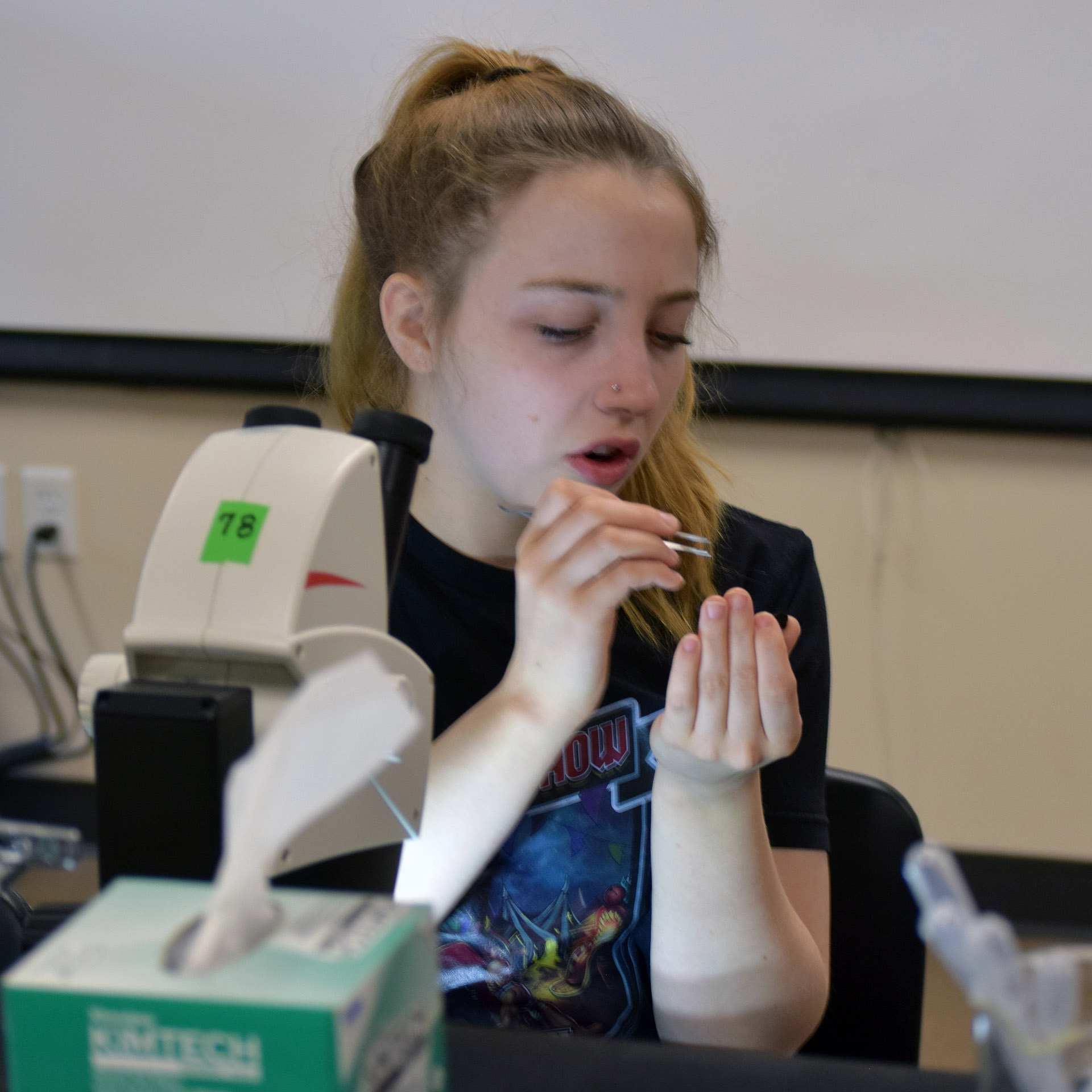
What SMC Green Club Was Up To at Macropalooza
Published on April 2, 2026 - 9 a.m.
Macropalooza sounds like a big deal.
It’s actually the opposite. “Macro” implies large-scale.
But in this case, with Southwestern Michigan College’s Green Club, “macro” refers to tiny invertebrates big enough to be seen with the naked eye. Invertebrates lack backbones, such as spiders, worms, snails, lobsters, crabs, insects and butterflies.
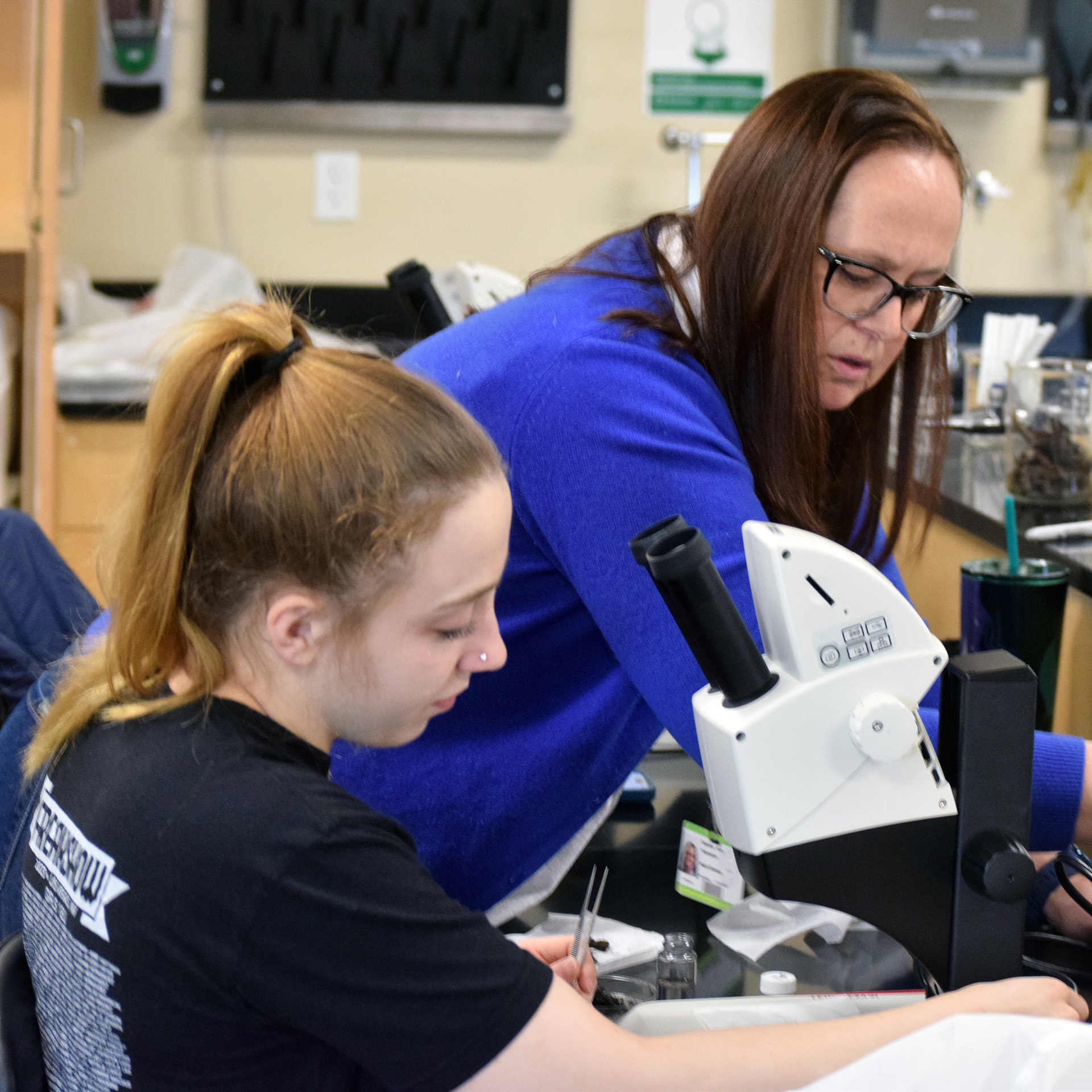
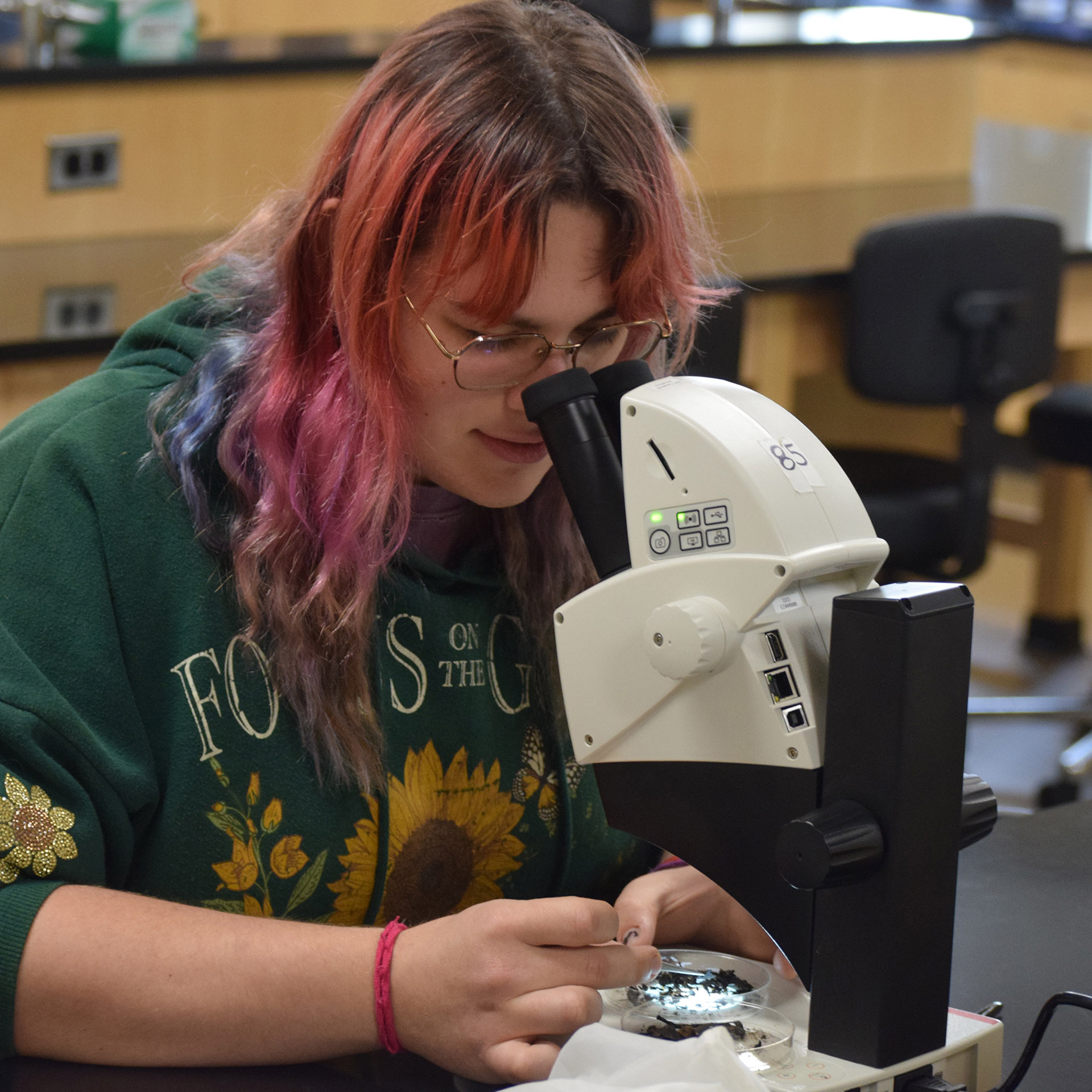
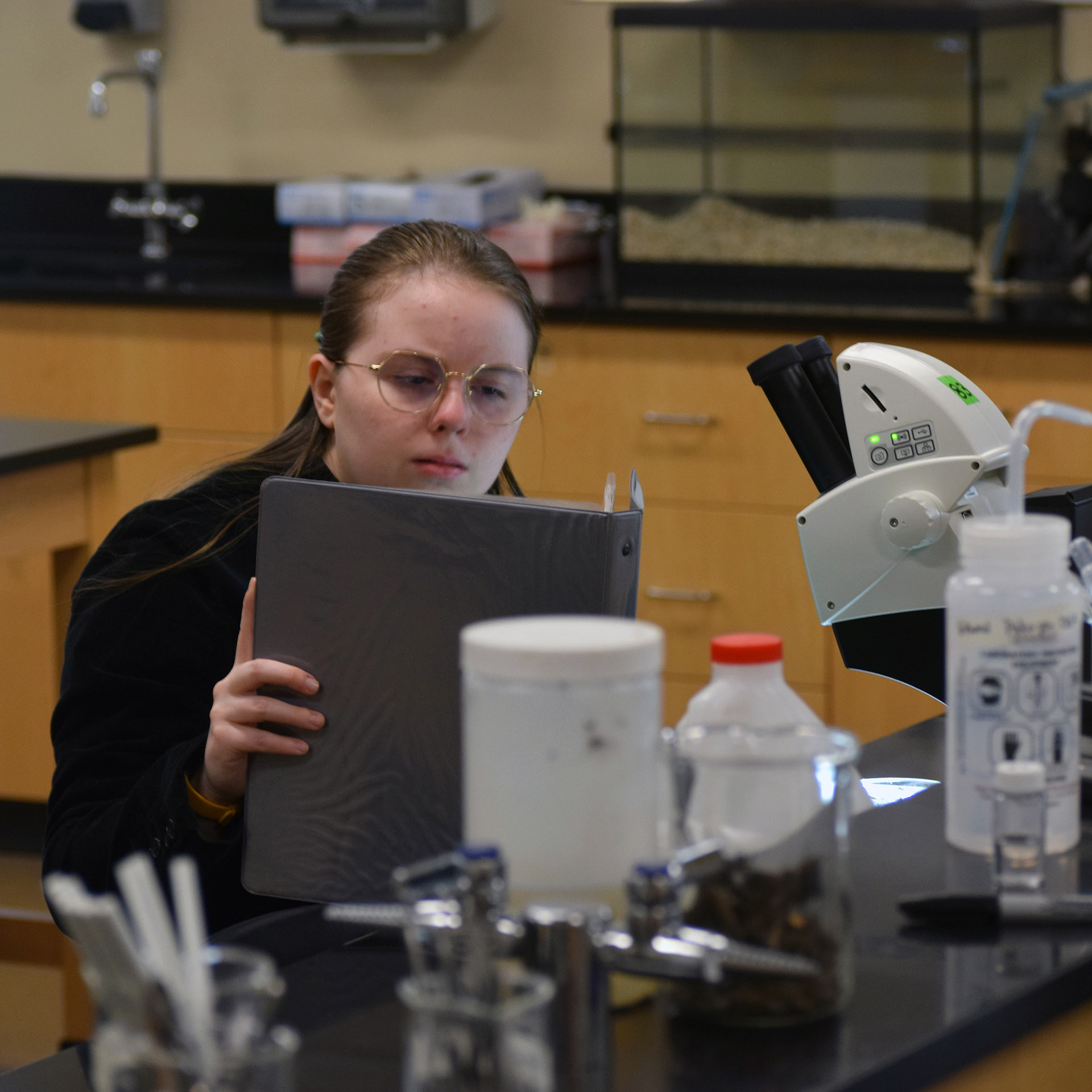
Green Club members deployed tweezers to maneuver black bits underneath the magnification of a stereoscope for identification, matching them with a colorful key, even if they look like they’re assembling jigsaw puzzles from chopped black olives.
Green Club undertook this sorting March 24 in collaboration with the Pokagon Band Department of Natural Resources (DNR) EPA (Environmental Protection Agency) reporting.
The Pokagon Band collected 60 samples. SMC processed three, with another session planned in April.
“When we go out with a class, I separate them from leaf litter, then we identify them,” Environmental and Biological Science Professor Deirdre Kirk said. “But the DNR over there just needs them isolated so they can do quick counts. If they’re very sensitive organisms, that usually tells us the water quality is really good. They’re only in areas with high oxygen content and other things that are healthy.”
“Every semester my environmental class goes out in the field,” Kirk said. “I usually take them to the creek bridge (Schuur Park) on Cass Avenue, which is downstream from the golf course. In Niles we go to Spaulding Lake Campground on Bell Road. Donna (Courtney) goes to the Mill Pond.”
Banter while tackling this tedious task stays pretty much on topic, with Kirk expounding on her fondness for mayflies.
Immature nymphs are aquatic with gills, living submerged for months to more than a year under water, feeding on algae and plant debris. They are crucial to trout food chains and act as water-quality indicators, preferring highly oxygenated streams, rivers and lakes.
“We see their cool gills fluttering, then they morph into flying,” Kirk said.
Alyse Koss, a 2024 Portage Northern High School graduate, became the first official women’s wrestler at an NJCAA school in Michigan when she signed with SMC for 2025-26.
She is majoring in environmental science and expects to graduate next year.
Lyra Goodnight, who turns 24 in April, graduated with the 769-member pandemic class of 2020 (17 valedictorians and three salutatorians) at Penn High School in Mishawaka.
Goodnight started college at private Kettering University in Flint. The former General Motors Institute is renowned for engineering, computer science and business, particularly automotive and robotics.
“They have a rigorous program where you go to school for three months, work for three months and repeat,” Goodnight said of its cooperative education model alternating academic terms with paid professional co-op experiences.
Goodnight will be taking Western civilization and communications over the summer, then two biology courses in the fall before graduating.
“I want to go for ecology/natural resources work,” Goodnight said. “I started in computer engineering and robotics, but got bored with staring at computer screens.”
Paige Allen, 18, is a dual-enrolled home-schooled student from the Berrien Springs area whose younger brother is going to study criminal justice at SMC. She was born in Michigan, but spent her formative years in Louisiana. She is considering becoming an evolutionary biologist or a conservation geneticist.
An evolutionary biologist studies the origins, diversity and changes in living organisms over time, analyzing genetic variation, natural selection and adaptation. They work in research, academia or conservation, using techniques such as DNA sequencing and fossil analysis to understand how species evolve and relate to one another.
Conservation geneticists apply molecular techniques, such as DNA analysis, to manage biodiversity, protect endangered species and maintain evolutionary potential.
They analyze population structure, inbreeding and hybridization to inform conservation strategies such as captive breeding, translocation and habitat management. Their work often involves assessing population viability and using forensics to combat illegal trade.
The Green Club, which meets weekly on Tuesday at 11 a.m., did trail clean-up in the fall. They’ll be taking part in a bird habitat rebuild April 18 at Fernwood Botanical Garden near Niles and plan Earth Day events for April.