News
SMC Hosts 110 for Eighth STEM Camps
Published on June 19, 2026 - 3 p.m.
Volcanoes, lava lamps and blue slime don’t seem to have much in common.
Except they are easily replicated in simple science experiments using familiar household products such as vinegar, baking soda, vegetable oil, dish soap and glue.
Such hands-on activities help develop problem-solving, critical thinking, communication, creativity and collaborative teamwork.
Southwestern Michigan College’s eighth STEM Camp took place in the William P.D. O’Leary Building on the Dowagiac campus June 16-17 for 110 Michiana students entering grades 4-6 this fall.
Math and Physics Professor Andrew Dohm, a mechanical engineer turned teacher, writes the grants that the Bosch Community Fund awards to underwrite summer camps that are free to all participants.
Campers came from Coloma, Dowagiac, Buchanan, Niles, Edwardsburg, Cassopolis, Paw Paw, Brandywine, Decatur and homeschool.
Each workshop explored a STEM letter — science, technology, engineering and mathematics.
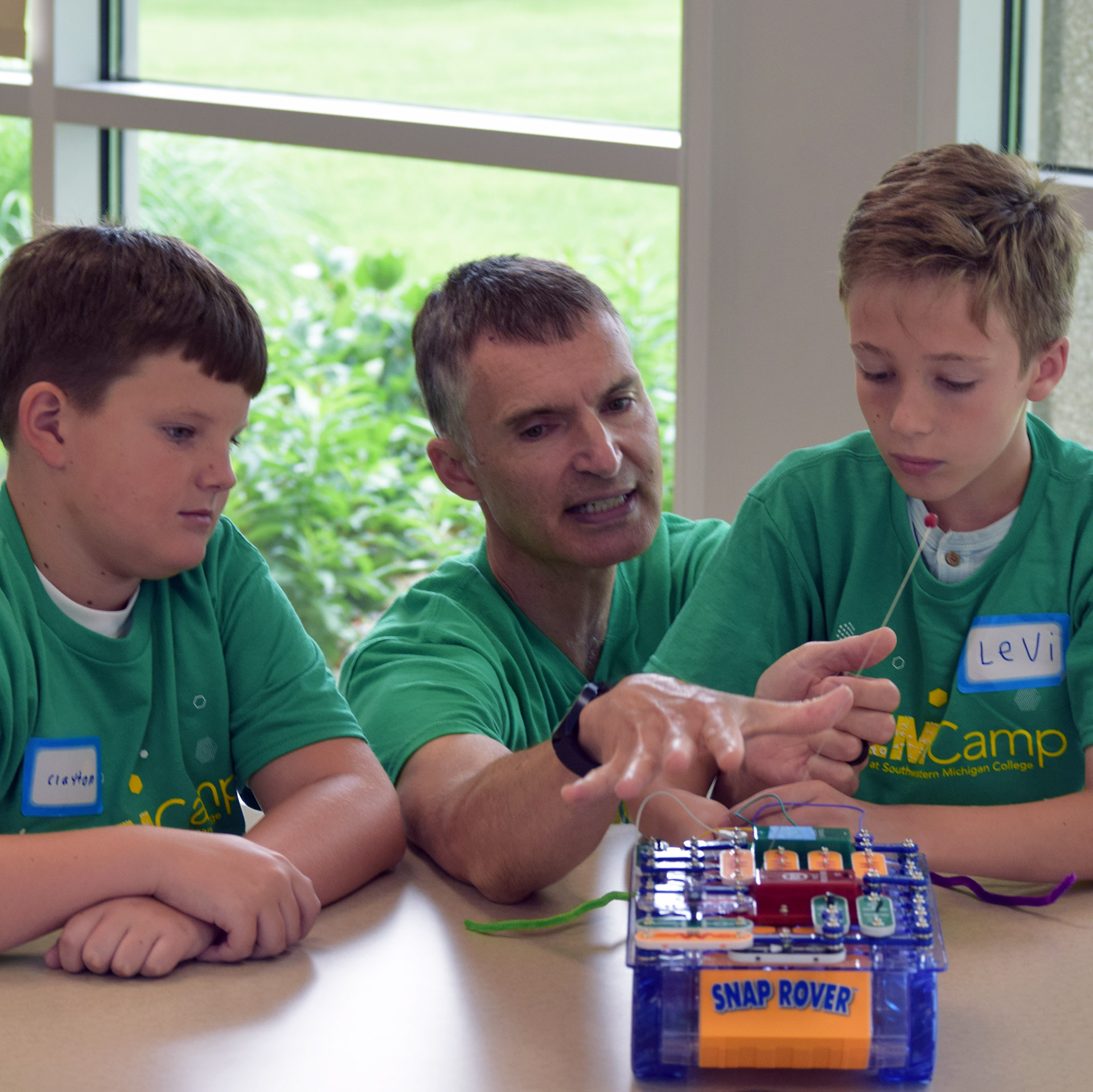
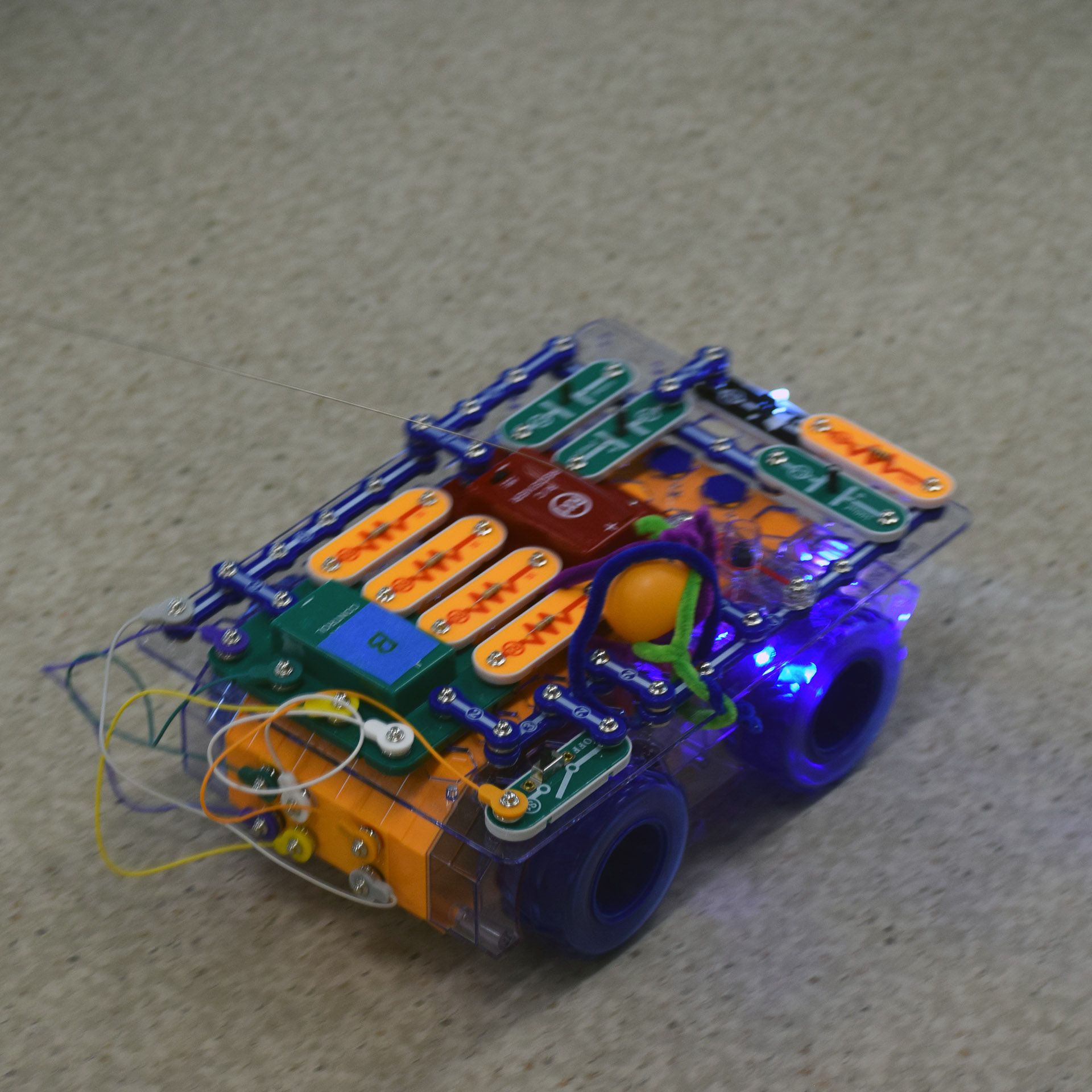
Dohm introduced electric circuitry in engineering with Snap Rovers, kits for assembling remote-controlled vehicles that can be snapped together.
A built-in LED headlight and horn helped navigate their mission of delivering supplies lashed to the rover with three pipe cleaners to a research station over treacherous terrain and into and back out of a dark tunnel.
Dohm began by discussing engineering in general. “There are all types of engineers, but they’re all faced with problems to fix, build or improve,” he said. “They do research and collect information about what’s been tried before. Then they gather ideas about what can be done to solve the problem. They work in teams because everybody brings different skills, abilities and experience. When you tap into all that and brainstorm, you can come up with interesting ideas that become a loop of prototypes until we get it right. You might be constrained by the materials you have to work with, the time or the money.”
They watched a video about Ellie Electron explaining electric circuitry, then finished assembling the robots by connecting six color-coded wires.
“Think of an unbroken path or circuit as a racetrack for electrons,” the video stated. “A break in that path anywhere at all, everything stops. Imagine a pump pushing water through a hose. That’s kind of like the voltage from a battery. Every simple circuit needs three things to work — a power source like a battery; a path; and a load, which does the actual work (like a light bulb or motor). Components help control the path. A switch is like a drawbridge on a road. When it’s up, the flow of electricity turns off. A resistor controls how fast the current flows. A capacitor holds energy, releasing it when the circuit needs it, like a camera flash.”
Edwardsburg Middle School science teacher Nichole Dohm led the chemistry lesson, focusing on observations, testing, measuring outcomes and chemical reactions versus physical changes.
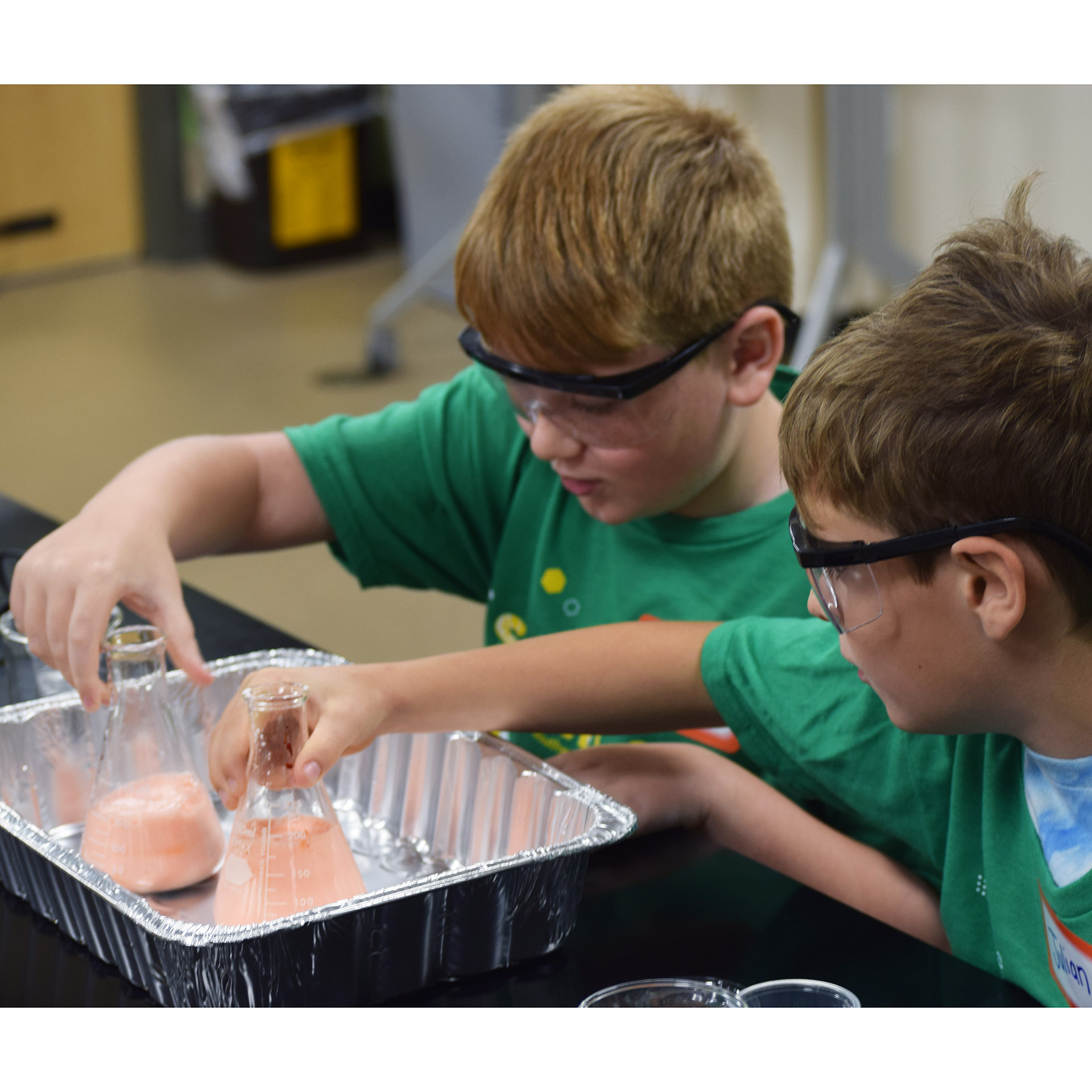
Volcanic eruptions can be simulated with baking soda, vinegar and dish soap. Combining a base and an acid produces carbon dioxide gas, forcing bubbly “lava” to flow.
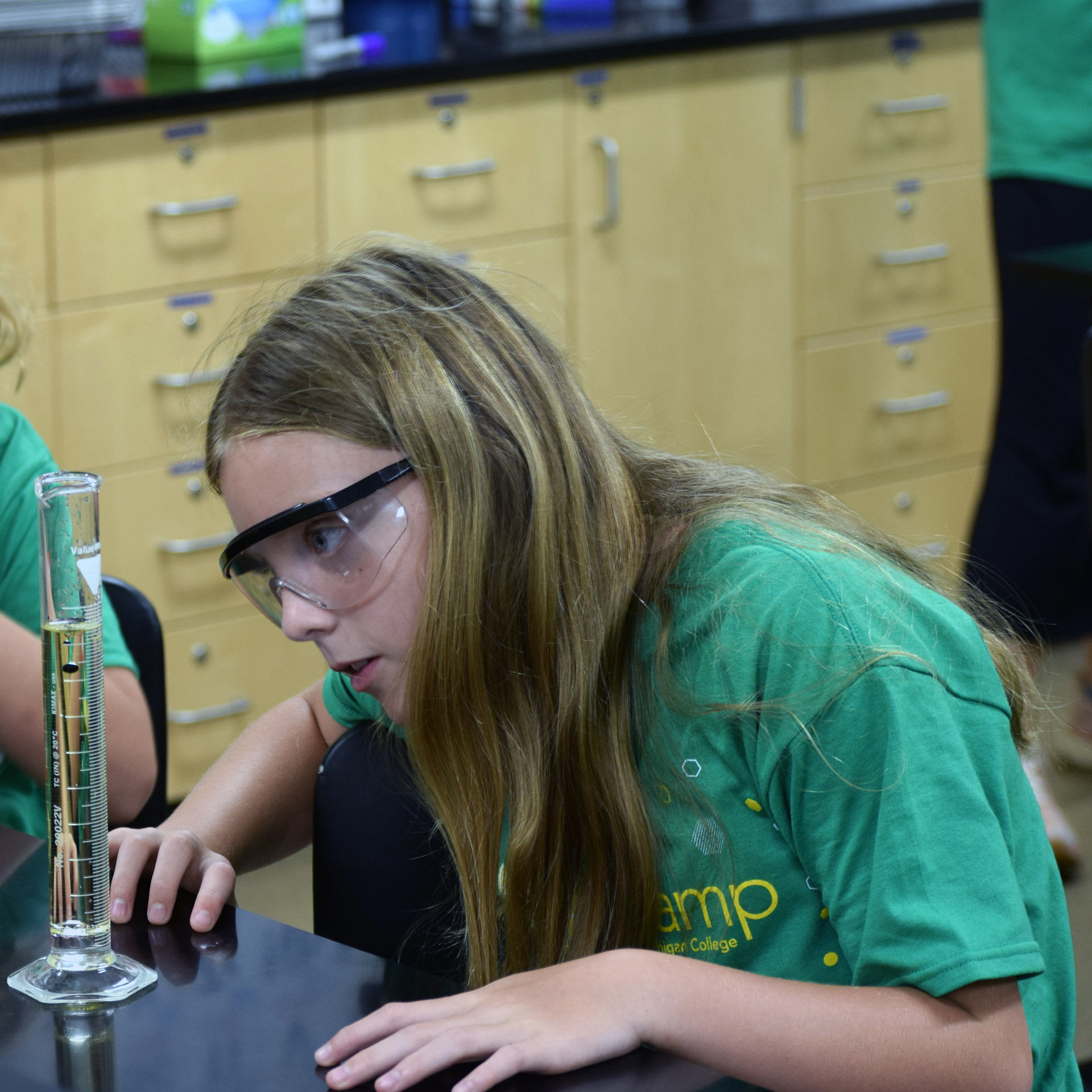
When graduated cylinders filled with oil combine with water, the lighter oil floats to the top and heavier water sinks as they separate. Food coloring sinks through the “hydrophobic” oil to mix with the water. Break Alka-Seltzer tablets, drop pieces in and watch colorful blobs rise and fall like a lava lamp.
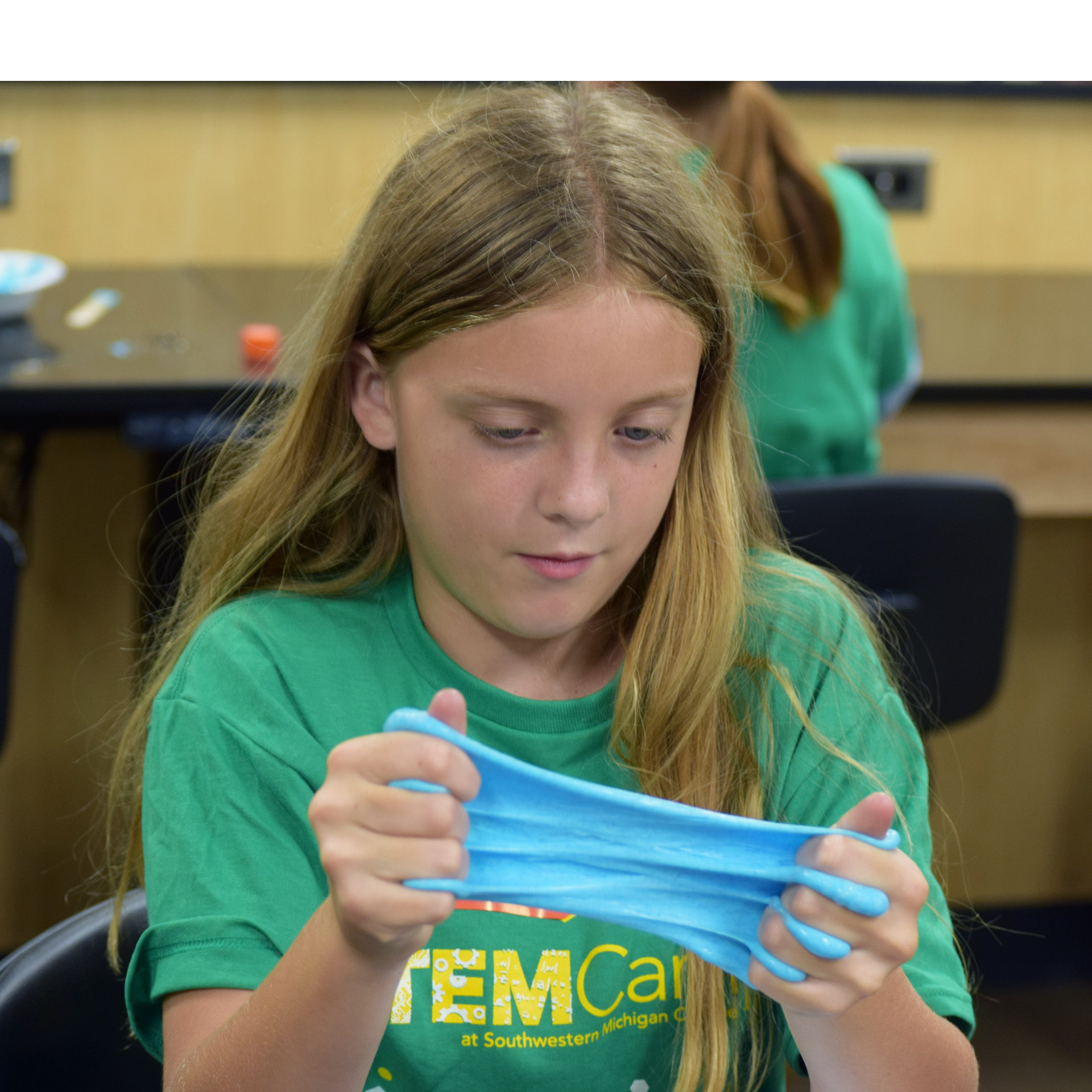
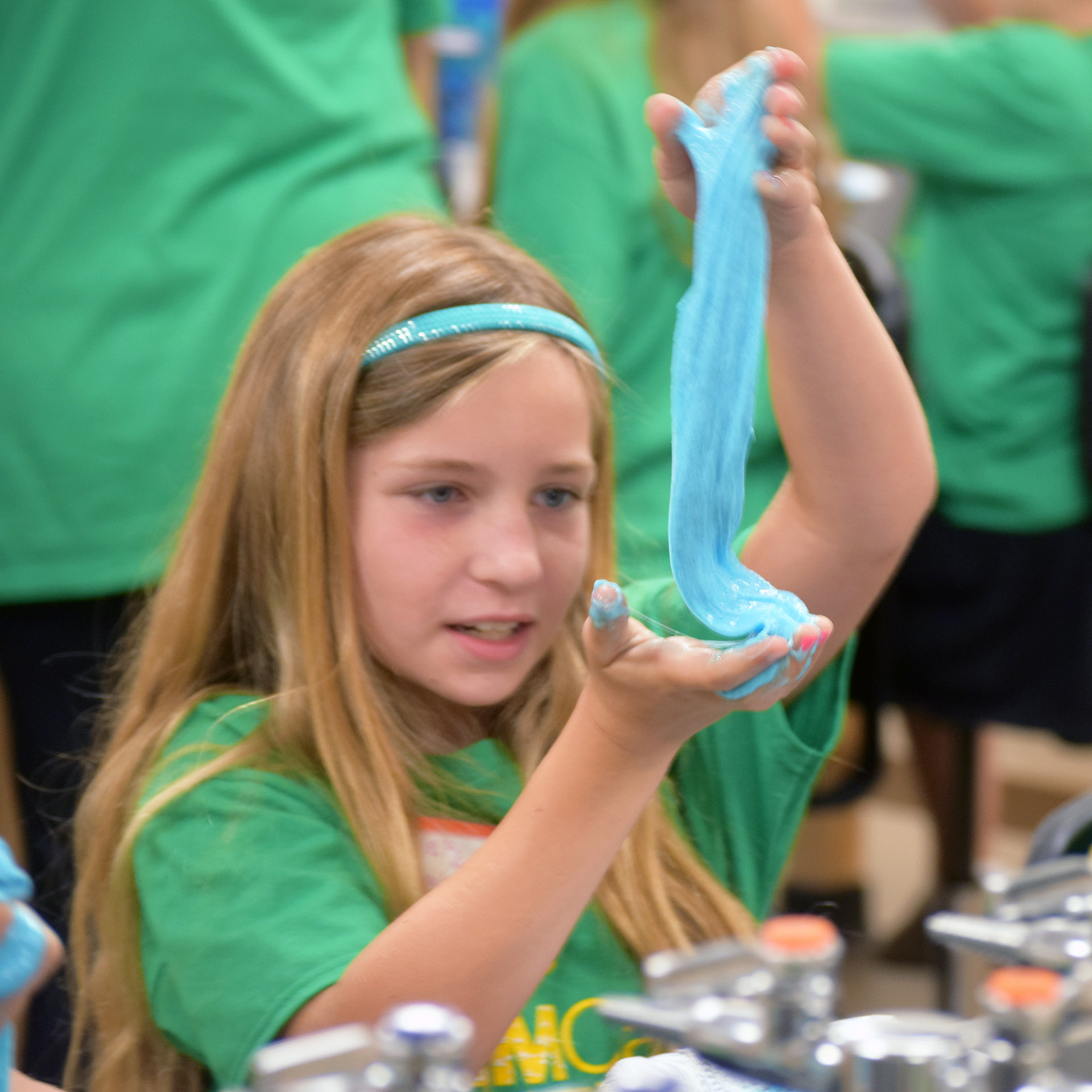
Glue is stirred together with baking soda and a beaker of premade “activator” (or contact lens solution if it contains boric acid) in a bowl, then knead the dough into stretchy slime.
Edwardsburg eighth-grade computer science teacher Debra Kraska introduced coding on laptops. “One of my favorite things about coding is it allows you to be creative,” she said.
Their programming introduction took them to code.org to animate dancing figures, layering such variables as animals, backgrounds, attire, genres of music and types of moves.
With coding and artificial intelligence (AI) seeping into every aspect of life, “My daughter went on a field trip to a dairy farm,” Kraska said, “and it was run by a company in Denmark. All the machinery was managed from that country. The kids thought the cows were cool. I thought the computers were cool.”
“When you Google, AI gives you a lot of the results,” Kraska continued. “Someone trains AI with millions of pictures, books and articles. AI learns patterns and similarities, then takes all the information it has and starts to make predictions. It’s not magic, it’s math. Which is why it’s not always 100-percent accurate.”
Abigail Craft, adjunct SMC faculty, sent math students on a scavenger hunt of sorts with fraction problems to solve for clues to unlock a treasure chest.